
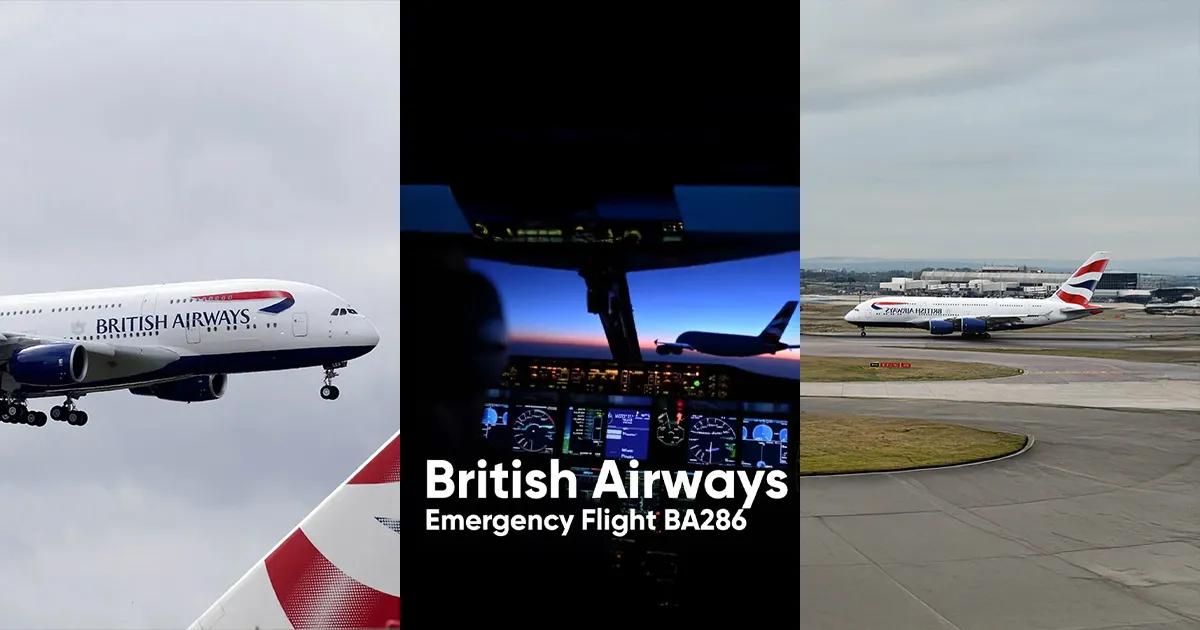
Scrolling through news between outfit inspo and celebrity updates, aviation drama rarely grabs attention like fashion week chaos. Yet British Airways emergency flight BA286 stopped us mid-scroll. The headlines sounded intense, the speculation louder and the facts frustratingly scattered. At Vogue Trendz, we do not do half stories. We believe you deserve clarity, context and truth—served without panic. So we dug deep, reviewed verified reports and examined why this flight still sparks global conversation. What unfolded was not aviation failure but aviation discipline in action. If you ever wondered how safety really works above the clouds, this story matters more than you think.
British Airways Emergency Flight BA286 operates on a high profile route from San Francisco to London Heathrow. It is a prestige corridor, flown by wide-body aircraft built for endurance and safety. When reports emerged in 2016 about crew members feeling unwell mid-flight, attention escalated quickly. The crew detected unusual odors and physical symptoms after reaching cruising altitude. As a result, they declared an emergency and diverted the aircraft. This decision triggered global headlines and long term scrutiny.
Over time, renewed discussions about cabin air safety revived interest in British Airways emergency flight BA286. Importantly, no fatalities occurred, and all affected individuals recovered. The event remains relevant because it reflects how aviation prioritizes safety over schedules. That choice matters every time you board a long haul flight.
Inside the cabin, events unfolded gradually, not dramatically. Several crew members experienced dizziness, nausea and difficulty focusing. Some passengers also noticed a strange smell near the upper deck galley. These symptoms raised immediate concerns about cabin air quality. At that point, standard safety protocols took over. The crew secured the cabin and informed passengers calmly. The pilots assessed multiple systems while maintaining steady flight control.
Unlike movie scenes, panic did not erupt. Instead, silence and professionalism dominated the cabin. This calm response reflects intense crew training. During British Airways emergency flight BA286, safety teams followed international procedures designed for uncertainty. The aircraft diverted to Vancouver, a suitable airport with full emergency support. That decision reduced risk and protected everyone onboard.
Modern aircraft rely on technology, but human judgment remains essential. During British Airways emergency flight BA286, pilots faced high-pressure decisions with limited time. One pilot focused on flying while the other managed communications and checklists. This structure prevents overload and mistakes. Because long-haul flights carry heavy fuel loads, landing early requires careful planning.
Pilots must either dump fuel safely or perform a controlled heavy landing. The crew also managed passenger communication, keeping information clear but reassuring. That balance matters more than most travelers realize.
Meanwhile, cabin crew supported affected colleagues while maintaining cabin safety. Their actions demonstrate Crew Resource Management at its best. The outcome proves that training, not luck, determines safety during emergencies.
Many headlines blurred the difference between failure and precaution. In aviation, that distinction matters deeply. A precautionary diversion occurs when safety margins narrow, not when systems collapse.
During British Airways emergency flight BA286, reports suggested a possible “fume event.” These events involve contaminated bleed air entering the cabin. While rarely catastrophic, they pose health risks. British Airways follows a conservative safety philosophy. That approach favors landing early rather than risking prolonged exposure.
Investigators later examined ventilation systems, engine seals and maintenance records. No definitive cause was publicly confirmed. Still, the response aligned with global safety standards. Declaring an emergency was not dramatic. It was responsible. For passengers, that choice reflects an airline prioritizing lives over logistics.
Once the aircraft landed in Vancouver, emergency services stood ready. Fire crews, medical teams and airport staff coordinated efficiently. Some crew members and passengers received hospital evaluations as a precaution. All were later discharged without long-term injuries. British Airways arranged accommodations and rebooking for affected travelers.
Additionally, regulatory agencies monitored investigations into cabin air quality. The aircraft later flew empty to London for further inspection. Although maintenance teams could not replicate the odor source, the case influenced industry discussions.
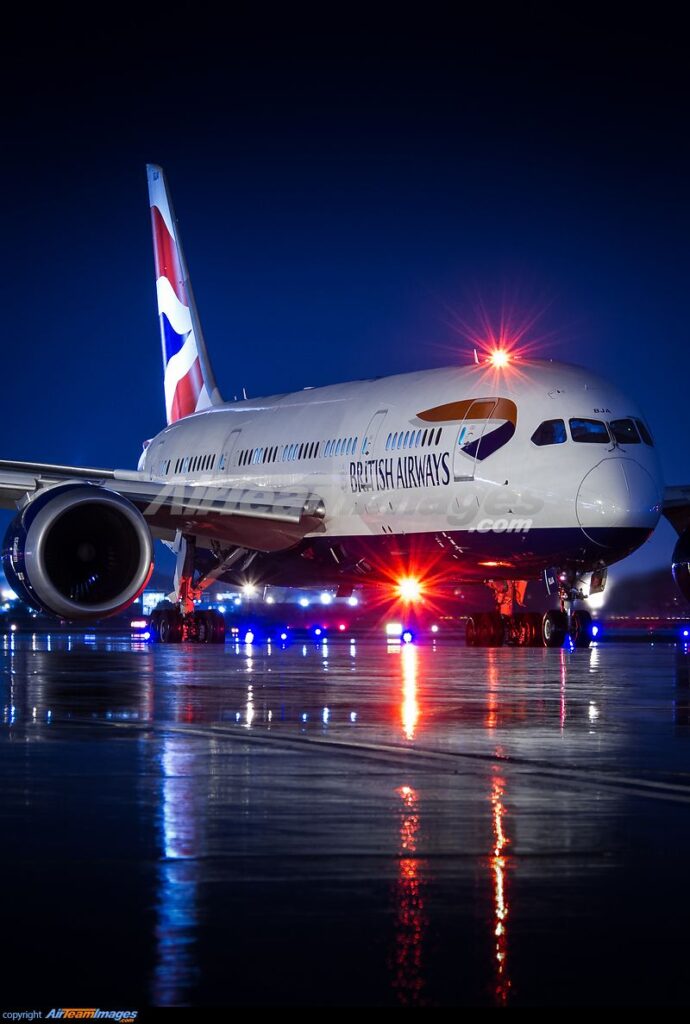
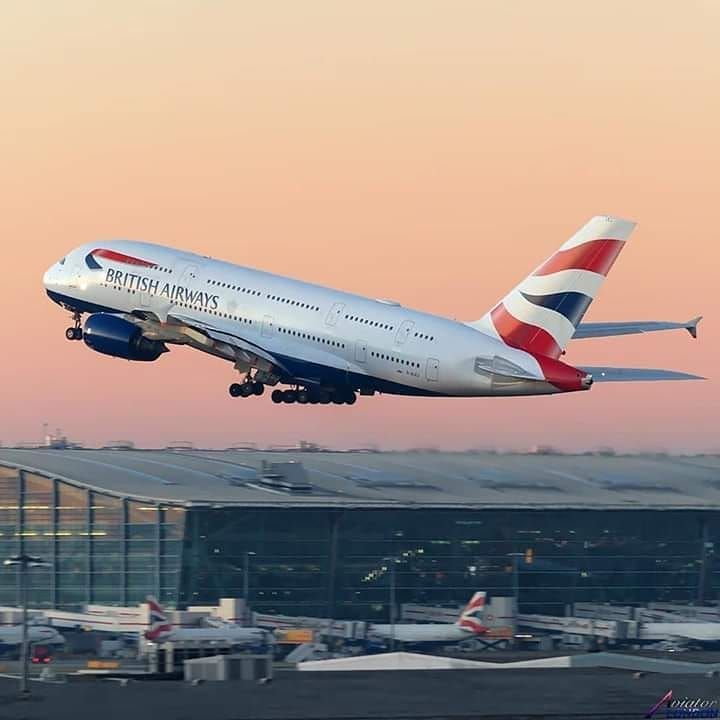
You might wonder why British Airways emergency flight BA286 still draws attention years later. The reason is simple: relevance. In 2025, BA286 operated by an Airbus A380 returned to headlines for a very different reason—a mid-air medical emergency while cruising at 41,000 feet over Scotland. Unlike earlier technical concerns tied to this flight number, the latest incident highlighted how swiftly modern aviation responds when human health is at stake.
A passenger’s sudden medical condition triggered an immediate emergency declaration, priority landing clearance and on-ground medical care within minutes. That response matters because it shows how systems, training and coordination now work together in real time.
For today’s travelers, British Airways emergency flight BA286 reinforces an important truth: emergencies don’t always mean danger. Often, they mean the system is doing exactly what it should. From pilots activating squawk 7700 to medical teams waiting at Heathrow, every step reflected preparedness and calm execution.
In an era where long-haul travel connects global hubs, fashion capitals, and fast-moving lives, this incident reminds you that safety protocols are designed to protect people first—even if plans pause briefly.
Aviation emergencies rarely look glamorous, but they reveal professionalism at its peak. British Airways emergency flight BA286 showed how trained humans manage uncertainty with discipline. From cockpit decisions to cabin care, every step followed tested procedures. This incident was not about fear. It was about foresight. We believe stories like this deserve calm explanation, not viral panic. When you understand how safety truly works, trust replaces anxiety. At Vogue Trendz, we stay unapologetically honest. The real headline here is simple. The system worked, lives stayed safe and lessons moved aviation forward. That is a story worth knowing—no turbulence required.